


Part 2 of a special two part essay for Gandhi Jayanti. Part 1 was also the fifth essay in my meaning collapse series of which the first is here, second is here, third is here and fourth is here.
Update on meaning collapse: when I started my Bhumics exploration at the beginning of 2025, I was already thinking the old ways had collapsed, but in retrospect, I was still comforting myself with interregnal thinking, of an old regime being replaced by a new one in due course.
I am now convinced that was wrong; the planetary is not a new regime, it’s not a condition that can be grasped with the categories of the present. We are forced to start with the categories of the present: politics, ethics, history etc, but these categories will have to be crushed along the way.
Crushed you say?
Yes, crushed.
There is a treatise by Nāgārjuna with the unapologetic title Vaidalyaprakaraṇa - often translated as Crushing the Categories, or Pulverizing the Categories. His target wasn’t the messy world of practical life; it was the pristine scaffolding of classical (Indian) logic. The Naiyāyika philosophers had established sixteen neat epistemological buckets - means of knowing, objects of knowledge, components of an inference - promising that if you only kept your categories pure, you could reliably master reality. Nāgārjuna took a sledgehammer to the lot. His point wasn’t that we can abandon words, but that none of these categories possessed an intrinsic, independent leg to stand on (svabhāva). A means of knowing and an object of knowledge exist only by leaning mutually against one another. Treat them as self-grounding, and you get conceptual proliferation (prapañca) masquerading as bedrock truth.
That is precisely where we find ourselves with the Planet.
Our inherited modern categories (all Western, if I may say so) such as sovereignty, rights, the economy, nature, citizenship, are our own Nyāya categories. They are the furniture of a social world that we asssume will withstand stretching across planetary boundaries.
Nope.
The Planet is not an additive problem to be solved within our existing lexicon, nor is it a temporary rupture waiting for a successor regime to restore order. It is a crusher of categories. To confront it is to watch our neat separations between human agent and inert background, between politics and physics, turn into dust. If we are to think the planetary, we have to endure the demolition of the very tools we use to think.
I have Gandhi to thank for that realization.
At the end of Part 1, I said that Gandhi matters more than you think, and less than you think. The less is relatively easy: the nation state and mass politics are tired ambitions, the return to tradition has been captured by fundamentalism, and hand-made craft isn’t going to replace industrial manufacture.
Now for the more.
The creative move, as I see it, was Gandhi’s ability to champion a modern ambition while subverting it using moral and intellectual resources unavailable to the imperial metropole. He wanted India to be free, but he didn’t think freedom consisted of Indians occupying the offices the British had vacated. In Hind Swaraj, he called that “English rule without the Englishman.” We get our own government, our own army, our own flag. Congratulations.
My hypothesis is that if Gandhi had been our contemporary, he would have seen the Planet as the Planet, just as he saw India as India. But what does that mean? Surely we already know that we live on a planet. We have photographs to prove it.
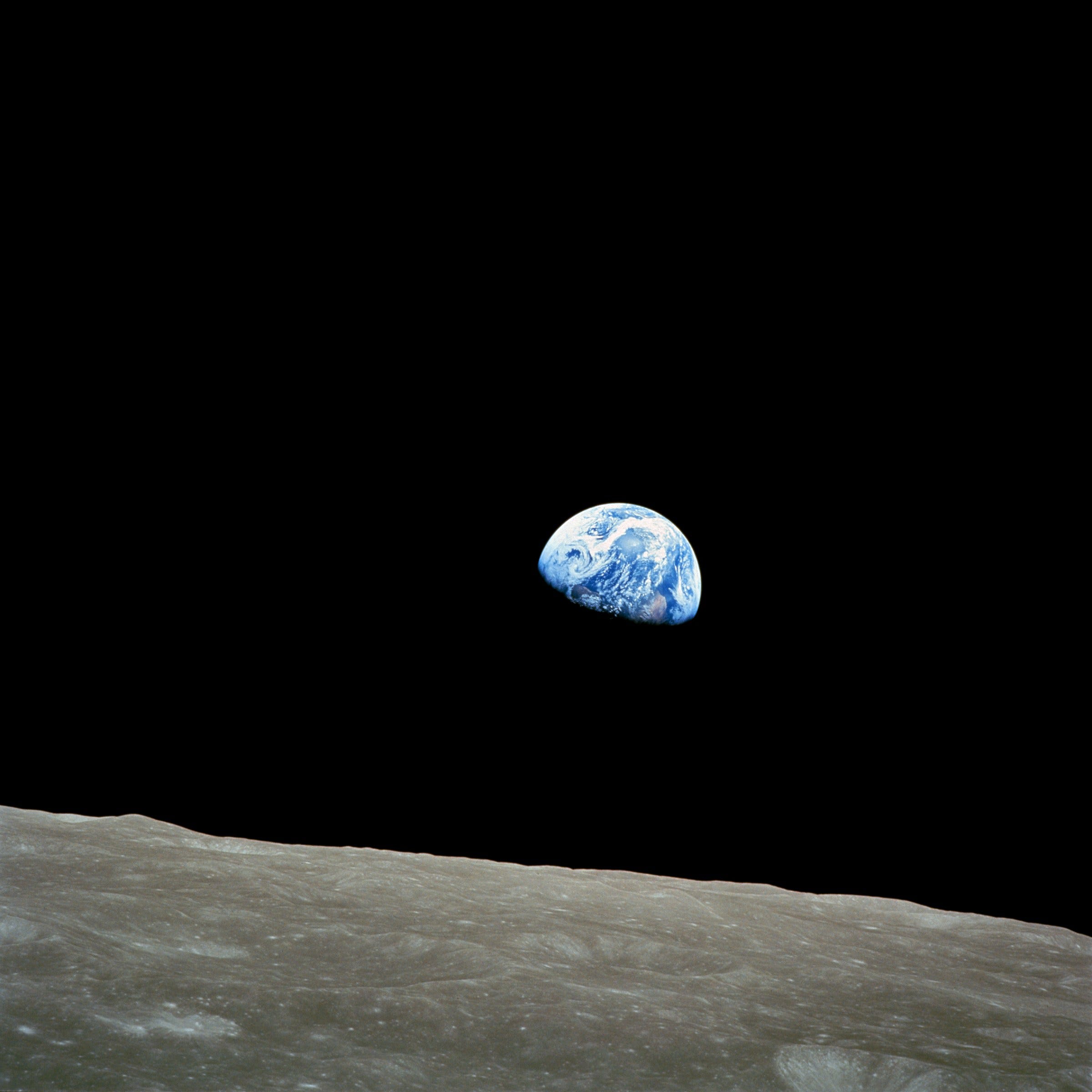
The Earth and the Globe
There are, broadly, two ways in which the planet has entered our consciousness.
The first is the Globe, the world of human connections. Empires, trade routes, migration, communication networks, institutions. You order something on your phone and a series of transactions involving people you will never meet brings it to your doorstep. A war elsewhere changes what you pay for cooking oil. The Globe is real, though its connections are experienced differently depending on who you are and where you are. The person ordering the package and the person delivering it don’t inhabit the same version of globalization.
The second is the Earth, which we apprehend through science. Satellites, sensors and computer models disclose a world of atmospheric circulation, ocean currents, geological processes and living organisms continually changing the conditions under which other organisms live. Much of this world exceeds anything we can experience directly. It’s the alterity that Spivak talks about in her book. The Earth also has a somewhat different sense of time. Five years is a long time for a government. A hundred years is a long time for a nation. Neither is particularly impressive to a rock. Deep time is its natural condition.
Earth and Globe are two ways of apprehending the same place, but we have become adept at keeping them apart. The economy belongs to one set of experts, the climate to another. Justice is a human concern; atmospheric chemistry is a scientific concern. We negotiate over the first and publish papers about the second.
Fortunately, the Planet doesn’t respect our departments.
Consider a container ship. It connects factories, workers, markets and consumers; that’s the Globe. It also consumes energy, moves materials and releases substances into air and water; that’s the Earth. These aren’t two separate activities. The same ship participates in both, and what happens on either side changes the possibilities on the other.
Earth + Globe = Planet.
That’s the shorthand for the synthesis I am calling Planetarity. Human history and Earth processes become intelligible together, and the conditions that we have so far treated as the background of politics enter the foreground.
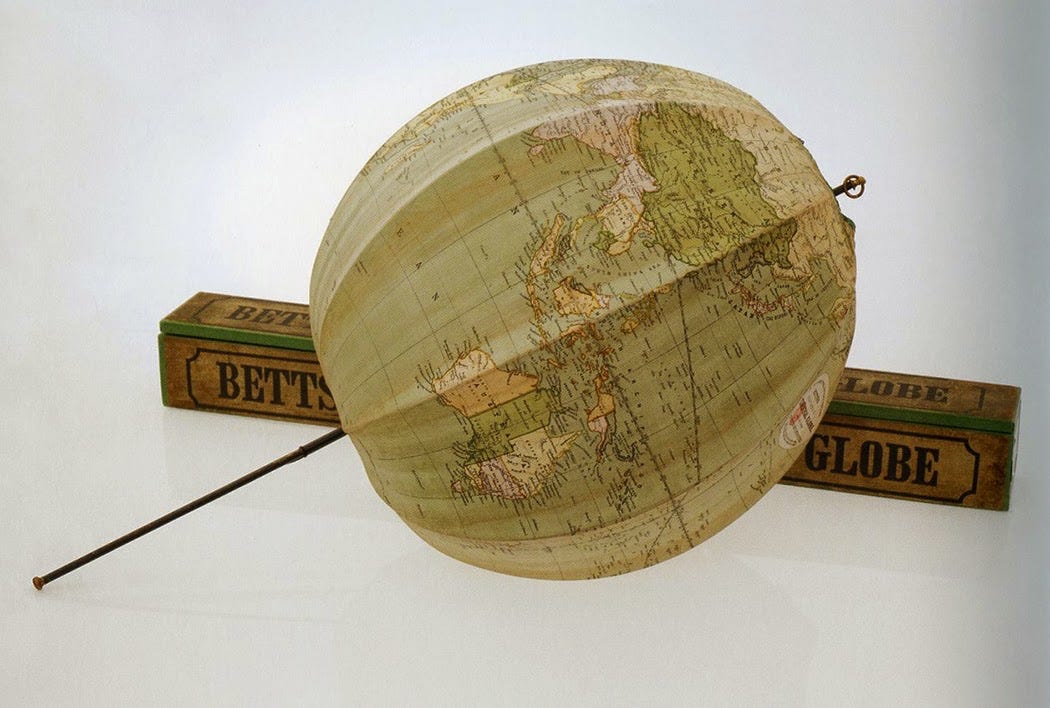
But there’s a complication. The scientific instruments that reveal the Earth were themselves built within the Globe. Computers, satellites and sensor networks have political and economic histories, including military ones. The Earth we know through science is already entangled with the human world whose effects we are trying to understand. The Planet isn’t the Globe with a climate policy.
Seeing India as India
Gandhi didn’t invent India, and he wasn’t alone in trying to make it free. But he was extraordinarily good at making India present in people’s lives as something they could act upon. Gandhi connected the scale of the nation to the scale of the person. Publishing a newspaper, joining a campaign, refusing to cooperate, wearing a particular kind of cloth: these became ways of participating in India’s freedom. You could inhabit the nation through what you did. That was the purpose of the Constructive Programme.
The contradictions didn’t disappear. India didn’t become a harmonious collective subject because Gandhi wished it so. But it became politically available to people who might otherwise have experienced it mainly as a territory administered by others. That’s the sense in which he saw India as India.
We have a similar challenge in the Planet. We have scientific knowledge of the Earth and everyday experience of the Globe, but our politics hasn’t caught up with their synthesis. We still imagine that a nation can secure its future while the conditions of planetary life are being undermined. Seeing the Planet as the Planet would mean recognizing that human freedom depends on relationships that exceed the human world. Other organisms, water, soil, the atmosphere: these aren’t resources waiting outside politics until we decide how to use them. They participate in making our political existence possible.
Nevertheless, the Planet isn’t a bigger India. There’s no planetary Viceroy we can ask to leave - we aren’t in an alien invasion movie - and its inhabitants don’t all belong to our species. But it too has to become something we can apprehend and act within, rather than a distant abstraction that specialists worry about. It’s an abstraction made real by our machines.
Gandhi Meets the Machine

But Gandhi rejected machines, didn’t he? Why would he take kindly to a world disclosed through satellites and supercomputers?
This is where we have to kill him first.
We can’t retain every historical Gandhian preference and expect a planetary politics to emerge. A contemporary Gandhi would have to learn from forms of knowledge unavailable to his predecessor. He would have to accept that some relationships can only be apprehended through technological mediation, and that refusing the machines might prevent him from understanding the world he wanted to change.
That would be a substantial revision. Good. Dialectics should apply to Gandhi too. More fundamentally, Gandhi was a master of print technology - he wrote incessantly, he published newspapers and books, and he maintained active correspondence with hundreds, if not thousands, of people. If we agree that:
Print: Nation :: Computation: Planet
then we have to master computational media in order to grasp the Planet as a Planet. Knowing the Earth through machines doesn’t mean that we should hand the Planet over to their operators. A climate model can tell us something about atmospheric change. It can’t decide whose interests count, who should bear the cost of changing an energy system, or who gets to authorize an intervention that affects people elsewhere.
As the Globe shades into the Planet, we recognize one side with the technological capacity to know and remake the Earth; and a Planet on the other side that exceeds our purposes, and that other beings have lives and claims of their own.
The Spinning Wheel Again
What would replace the spinning wheel?
A solar panel is an obvious candidate. Decentralized production, sunlight instead of fossil fuels, electricity for everyone. Gandhian vibes.
But a solar panel has a metabolic history too. Someone mined its ingredients, someone manufactured it, someone transported it. Someone owns it, and eventually someone has to deal with what remains. The sun may be freely available, but access to its electricity isn’t organized by the sun.
The spinning wheel mattered because cloth became a way of connecting everyday activity to a larger political ambition. Khadi connected self-reliance, the struggle for swaraj and something people could wear.
The contemporary equivalent would have to make planetary relationships similarly available to action. It might involve community energy systems, the repair of a watershed, or forms of food production in which soil, water and other organisms become matters of collective concern. I don’t know which practices would acquire that force. Installing a device isn’t enough.
The question is how we make the metabolic basis of our lives visible and politically consequential. Whose labor sustains us? What do our infrastructures demand from the Earth? Which dependencies are necessary, and which are arrangements that some people benefit from while others bear the cost?
Freedom and Habitability
The same dialectic changes the meaning of non-violence.
The person consuming out of necessity and the person organizing production for profit have different powers to change what happens. We shouldn’t lose those distinctions in the excitement of discovering that everything is connected.
Giving a river legal standing might help, but who speaks for it? How do we know when its representative is representing the river rather than their own interests? Non-human political recognition opens a whole set of questions. Swaraj would change too. Local self-government would remain valuable, but no locality governs all the processes on which it depends. Atmospheric chemistry isn’t a village affair. Some decisions require planetary coordination; others require protecting local communities from institutions claiming to act for the Planet.
Habitability gives this planetary politics its ambition: sustaining the conditions under which different forms of life can continue to live and flourish.
The Gandhian Contradiction Returns
Gandhi’s achievement was to pursue a modern idea of freedom while questioning the civilization that defined its dominant form. The Planet is a different beast altogether; a hyperobject that’s barely touched by Western political categories, or for that matter, any human civilization’s political categories. Consider the strange figure of Shrimad Rajchandra—or Raychandbhai, as Mohandas called him. When Gandhi returned to Bombay in 1891, he was an insecure young barrister whose thin veneer of Victorian polish only accentuated his profound dislocation. Over the next decade, especially during his lonely, formative years in South Africa it was to Rajchandra that Gandhi turned in an anguished correspondence.
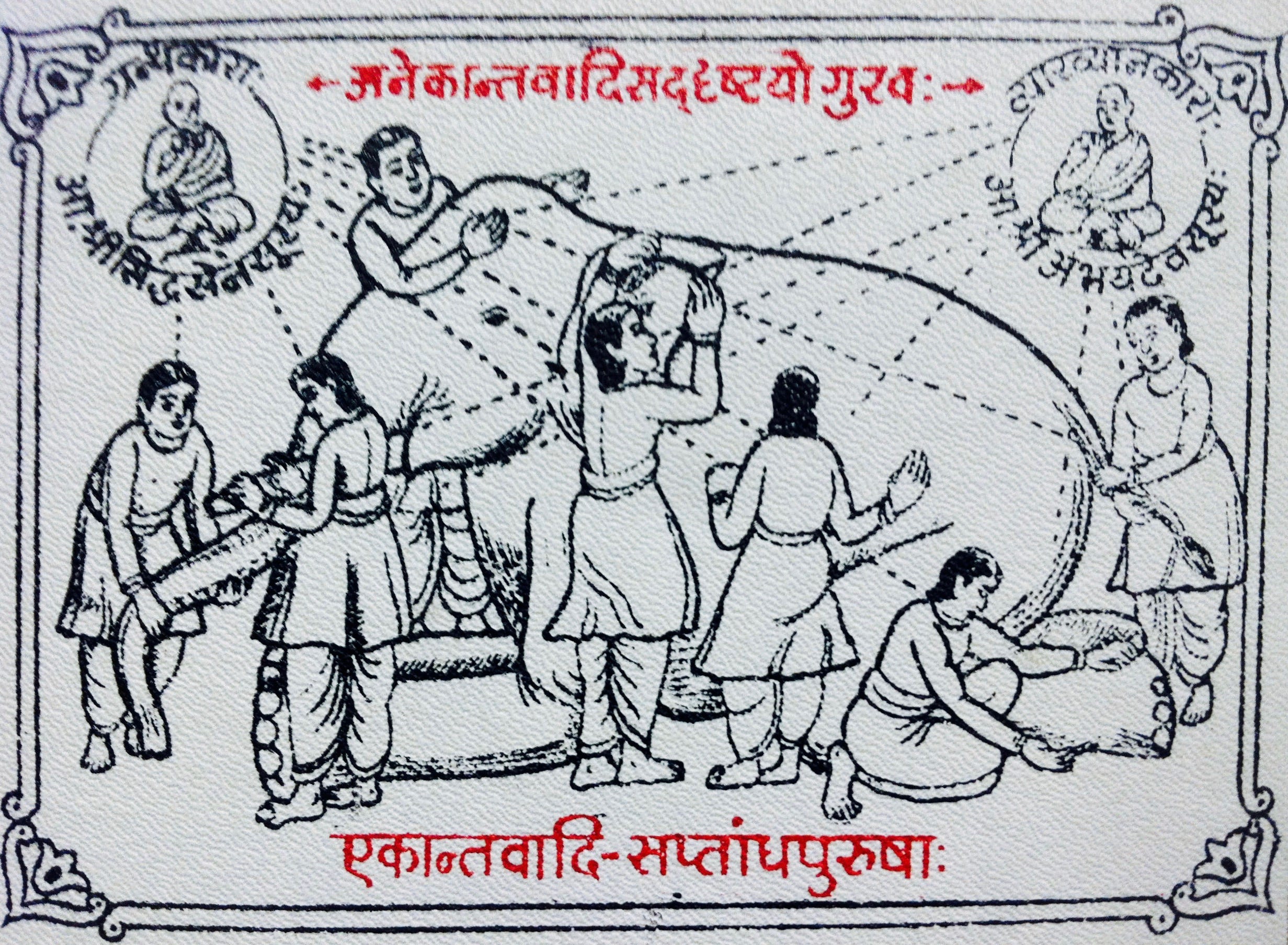
Rajchandra didn’t just talk him out of conversion; he gave Gandhi his intellectual spine. Rather than offering defensive Hindu chauvinism, he grounded him in the austere, relentless metaphysics of Jainism. Non-violence is often trivialized as a tactical posture: do not hit back, absorb the blow, capture the moral high ground. For Rajchandra, however, ahimsa was an ontological reality. The cosmos was not an empty theater staged for human drama; it was crawling with jīvas—sentient life animating not just animals, but trees, water, and microscopic entities. Layered onto this was anekāntavāda, the radical doctrine of reality’s “many-sidedness.” No single dogmatic perch could claim a monopoly on truth; the absolute could only be approached aslant, through partial views held in disciplined relation.
Hyperobjects would not have been a problem for Gandhi; the idea that there’s an Elephant whose full extent remains unseen would have tickled his fancy.
That’s why I think Gandhi would have seen the Planet as the Planet. The synthesis of Earth and Globe would have given him a new political object, and a new set of contradictions to work with. Gandhi-II would have embraced scientific capacities the actual Gandhi-I distrusted, while questioning the ambitions of the people who controlled them. He would have pursued freedom while discovering how deeply freedom depends on other forms of life.
Of course, this is a hypothesis; or rather, a counterfactual. I can’t prove it by finding an ecological sentence in his collected works. The Gandhi I am imagining would have to encounter a world he didn’t know and allow it to change him. But that’s the point of bringing him into the present. We aren’t looking for instructions from a man born in 1869. We are trying to recover a capacity for civilizational transformation, a society discovering the Planet amid the ruins of the Globe.
Now that we have met him on the road, time to kill him. But how?
This classic essay by Orwell on Gandhi gives us a clue. He says:
But one should, I think, realize that Gandhi’s teachings cannot be squared with the belief that Man is the measure of all things, and that our job is to make life worth living on this earth, which is the only earth we have. They make sense only on the assumption that God exists and that the world of solid objects is an illusion to be escaped from.
We have spent the last six centuries dethroning Man from the center of the universe and the center of life, but if anything, we have doubled down on Man being the measure of all things. AI is putting pressure on that last holdout. We can keep Gandhi alive by agreeing that Man is not the measure of all things, but we can kill him by saying: neither is God. It is the Planet instead.