Fourth in my series of essays on the collapse of meaning. First here. Second here. Third here.
The Machinic Utopia
Can’t buy me math, can you?
Well, until about a year ago, that was probably the case. No spectacularly new math could be done - at least not in a straightforward way - for money. You needed a math genius, a raving lunatic who nevertheless had a direct connection to the God of Numbers. Or a poorly paid professor, not a math-slinger for hire. Mathematical heroes aren’t mercenaries.
Not anymore. You can just pour compute and tokens into a machine, and you’ll get the theorems you want. More or less. Maybe there will be obstacles. Maybe there will be some kinds of math that will remain unprovable this way. But it sure looks like the machine is taking over mathematics, or at least, the proving of theorems division. It’s a sad situation. And there’s no dearth of people talking about how money and greed are taking over a pure subject.
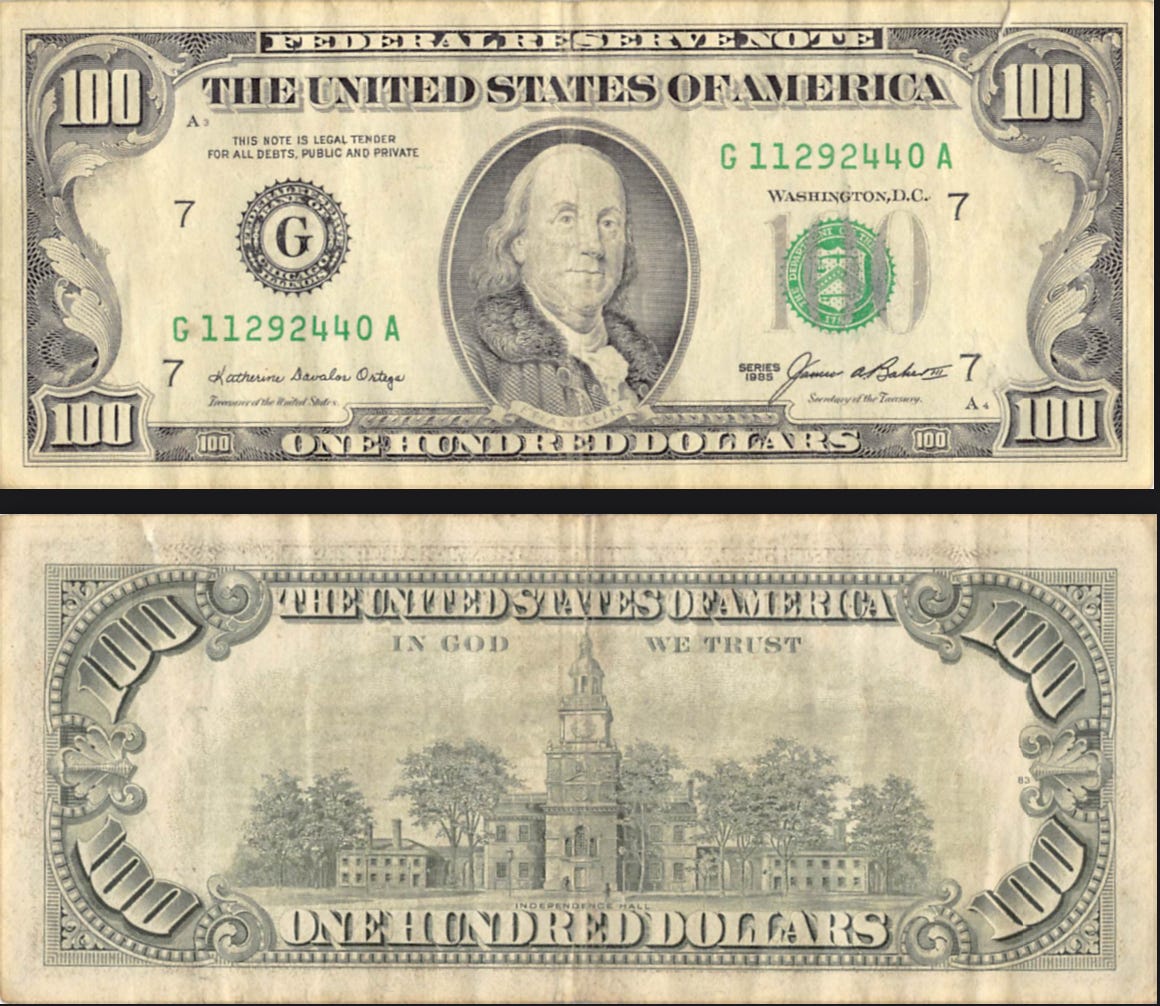
I got some news for you. Money isn’t that different from mathematics. If math is the disinterested application of numbers to the world, money is the self-interested application of numbers to the world. As technologies, they’re more similar to each other than you would care to admit. There is a reason why mathematicians are hired on Wall Street and not disc jockeys. This whole question of extruding intricate theorems by pouring tokens into a funnel makes me think that we’re returning to a pre-prehistoric time in human history.
Until we had the widespread availability and use of tools, I’m thinking, let’s say, until about a fifty thousand years ago, we didn’t create anything the way we do now. You mostly ate what you found or chased. We perhaps fashioned a bed out of hay; no, maybe even hay didn’t exist. Beds out of some grasses. We created little nooks in caves that would protect us from the elements and predators. Those nooks were our factories, but the rest of the earth was left to its own. Human labor did not shape the world. The shock of AI is so high precisely because we live in the Anthropocene, where human labor has shaped the world.
Anthropocene ➡ Ainthropocene
You can think about that in a capitalist way or in an evolutionary way. The capitalist take is that labor is about to become redundant. All we need is capital: pour it into the machine and out comes a theorem. Or a car. The evolutionary way says, if machines and robots make everything, we won’t need to be in the business of making it all. We would be a post-labor species. In both worlds, the only thing that humans will be needed for is to express their intent.
Why even that? Why not get rid humans altogether and let machines express intent with other machines. I will come to that at some point in this series, but as a teaser let me say: even the matrix needed human brains.
Intent aside, there’s a Universal Touring Machine that, given the appropriate amount of compute and energy, will produce whatever you want and deliver it to your doorstep. Actually, I don’t want to say “a Universal Touring Machine” because that suggests there will be on master machine - monotheism in mechanical guise. Sorry, the future is polytheistic. The machine gods will be many, not one. Which is why even they will need something like money.
Wait, what are you talking about. Why will AI agents need money, when all they need is energy and compute. Isn’t it enough that the sun shines on solar panels that convert photons into energy, energy into compute, and from that into joules, and it’ll just self-organize? Why does the machinic utopia need money?
Take liquidity seriously as a metaphysical posture will you?
Money serves many purposes: it’s a store of value, a medium of exchange and a keeper of accounts, and just as mathematics has been getting more and more abstract over time, so has money. For much of history, money was made out of valuable materials - gold, copper etc, which (ideally) had the same value as a substance as the number stamped on the coin. A silver dollar had a dollar’s worth of silver, so to speak.
Do you see the contradiction there: how much is a dollar, oh, it’s that much of silver; how much is that much of silver - it’s a dollar.
Mathematicians started worrying about contradictions in the late 19th century, when set theory made its way into their consciousness. But money has long held a similar contradiction: there’s no absolute ground of value on which we can construct an objective scale of money. Why are rubies valuable? You tell me: jewellery makes absolutely no impression on my mind.
No measurement system can guarantee its own accuracy
When mathematicians realized the truth of this statement, they made such a huge furore that we still read about it; meanwhile the money people are constantly shifting foundations because they know their house is built on sand. Substance money (i.e., money backed by a valuable substance such as gold), Fiat money (money backed by the power of the state), Cryptocurrency (money backed by crytographic protocols) and Token money (compute as cash in the time of AI) are all incommensurable ‘foundations’ of money. Scratch the surface a little deeper, and I bet we will find many more monetary protocols.
Is it possible that the money-grubbing financier is a subtler metaphysician than the pure mathematician? Heaven forbid....
One good thing about meaning collapse - you know, the thing I wrote about last week - is that it’s loosened all kinds of moral and metaphysical biases in my head. I am not about to join Goldman Sachs - not that they’re offering me a partnership - but I have a fresh appreciation of the sophistication of so called practical systems, and the human judgment they rely on.
We exercise judgment on when a measurement system, monetary or mathematical or otherwise, is doing its job, when it’s flawed and when the system as a whole has to be rejected. Consider IQ. It measures something of value in a pre-AI knowledge society, but it’s a mistake to turn it into a biological property and attributing that biological property to races and genders, and AI is going to commoditize every skill that’s considered high IQ, so its relative value is going to plummet. IQ is a brittle measure of human value at a time when we want our measures to be liquid. This is what Google said when I asked it to define “liquidity”:
Liquidity is how easily and quickly something can be turned into cash without losing much value.
In finance, when people say an asset is “liquid,” they mean you can sell it fast, at a fair price, with minimal hassle. Cash in your bank account is the most liquid. A publicly traded stock in a big company is usually very liquid because lots of buyers and sellers are active every second.
A house, by contrast, is much less liquid. You might be able to sell it, but it can take weeks or months, and you may have to cut the price to find a buyer - that’s low liquidity. The same idea applies to markets as a whole: a “liquid market” has many participants trading often, tight bid-ask spreads, and the ability to handle big orders without prices moving too much.
So whenever you hear “liquidity,” think: how fast can this be converted to usable cash, and how much value will I lose (or not lose) in the process?
Compute may be the most liquid thing we have on our hands - convertible to proofs one day and houses the next. The financier, being a practical person, is OK with the foundations of their empire being liquid rather than solid. They don’t share Bertrand Russell’s obsession with certainty. And that might be a good thing!
Take liquidity seriously as a metaphysical posture will you?
At their core, money and other measurement systems are relational - we decide what’s of value and how to measure that value, and that decision is inevitably circular; however, it’s not a mere convention, for our collective perception of value changes systematically with the times: there’s a measure of objectivity to why IQ was a valuable measure of intellectual capacity then, less so now and soon to be worthless in the future. Which prompts me to ask:
Why don’t we pay trees for plucking their fruit?